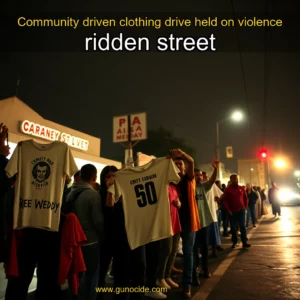

This is not a new phenomenon, but rather a continuation of a long history of systemic racism in the gun control movement.
The Origins of Racist Gun Control Laws
The first anti-gun laws in the United States were enacted in the late 19th century, specifically targeting Black people. These laws were designed to restrict the right to bear arms, which was a fundamental aspect of the Second Amendment. The laws were rooted in racist stereotypes and prejudices, viewing Black people as inherently violent and prone to crime. The 1876 New York State law, for example, prohibited Black people from owning firearms, while allowing white people to do so. The 1887 Louisiana law made it a crime for Black people to carry a firearm, even if they had a valid permit. The 1890 South Carolina law prohibited Black people from owning or carrying firearms, with severe penalties for those who violated the law.
The Legacy of Racist Gun Control Laws
These laws were not isolated incidents, but rather part of a larger pattern of systemic racism in the gun control movement. The laws were designed to maintain white supremacy and control over Black communities, perpetuating a cycle of violence and oppression. The 1968 Fair Housing Act, for example, included provisions that allowed landlords to deny housing to people with felony convictions, including those related to gun crimes. The 1986 Anti-Drug Abuse Act created mandatory minimum sentences for crack cocaine offenses, disproportionately affecting Black Americans.
The Problem of White Supremacy and Gun Violence
The United States has long struggled with the issue of white supremacy and gun violence. The two are deeply intertwined, with white supremacist groups often using self-defense laws as a means to justify their violent actions.
The narrow focus of traditional psychiatry overlooks the complex interplay between mental health and society.
He is known for his work on the intersection of psychiatry and sociology, and his research focuses on the social and cultural factors that influence mental health.
The Intersection of Psychiatry and Sociology
Dr. Metzl’s work explores the complex relationship between mental health and society. He argues that traditional psychiatric approaches often overlook the social and cultural contexts in which mental illness arises. Instead, he advocates for a more nuanced understanding of mental health that takes into account the broader social and cultural factors that shape an individual’s experiences.
The Problem with Traditional Psychiatry
Traditional psychiatric approaches often focus on the individual’s biology and genetics as the primary causes of mental illness. However, this narrow focus can lead to a lack of attention to the social and cultural factors that contribute to mental health issues. For example, poverty, racism, and social inequality can all have a significant impact on mental health, but these factors are often overlooked in traditional psychiatric approaches. Some of the key limitations of traditional psychiatry include: + A focus on individual biology and genetics + A lack of attention to social and cultural factors + A reliance on pharmaceuticals as the primary treatment option + A failure to address the root causes of mental illness
The Sociological Perspective
Dr. Metzl’s sociological perspective offers a more nuanced understanding of mental health. By examining the social and cultural contexts in which mental illness arises, he argues that we can better understand the complex factors that contribute to mental health issues.
According to the National Rifle Association, Black women are now the fastest-growing demographic in the gun-owning community.
The Rise of Black Gun Ownership
The data suggests that Black Americans are increasingly turning to gun ownership as a means of self-defense and empowerment. This shift is not limited to urban areas, but is also evident in rural communities.
Factors Contributing to the Rise
Several factors are contributing to the rise of Black gun ownership. These include:
Gun violence disproportionately affects Black communities
This creates a power imbalance that disproportionately affects the Black community. For example, in 2019, the National Rifle Association (NRA) released a study that found that Black Americans are more likely to be shot and killed by police officers than by criminal perpetrators.
Gun control policies disproportionately affect Black communities, exacerbating existing racial disparities in gun ownership and violence.
The Problem of Gun Control and Racial Disparities
The debate over gun control has been a contentious issue in the United States for decades. While proponents of gun control argue that it is necessary to reduce gun violence, opponents counter that it infringes upon their Second Amendment rights.
Stand Your Ground law aims to limit circumstances in which individuals can use deadly force to defend themselves.
The Proposed Law
The proposed law, which has been dubbed the “Stand Your Ground” law, aims to limit the circumstances in which individuals can use deadly force to defend themselves. The law would require that individuals use all reasonable force necessary to protect themselves, but only in situations where they reasonably believe they are in imminent danger of death or serious bodily harm.
Key Provisions
Rationale Behind the Proposed Law
The proposed law is intended to address concerns about racial disparities in the use of deadly force by law enforcement. Proponents of the law argue that the current system is biased against Black people and that the “Stand Your Ground” law would help to level the playing field. The law would provide a clear and consistent standard for the use of deadly force, which would help to reduce the risk of racial disparities. The law would also provide a mechanism for individuals to report incidents of racial bias in the use of deadly force, which would help to identify and address systemic issues.*
Criticisms of the Proposed Law
Critics of the proposed law argue that it would not address the root causes of racial disparities in the use of deadly force.
The Rise of Black Gun Ownership
In recent years, there has been a noticeable increase in the number of Black Americans acquiring firearms.