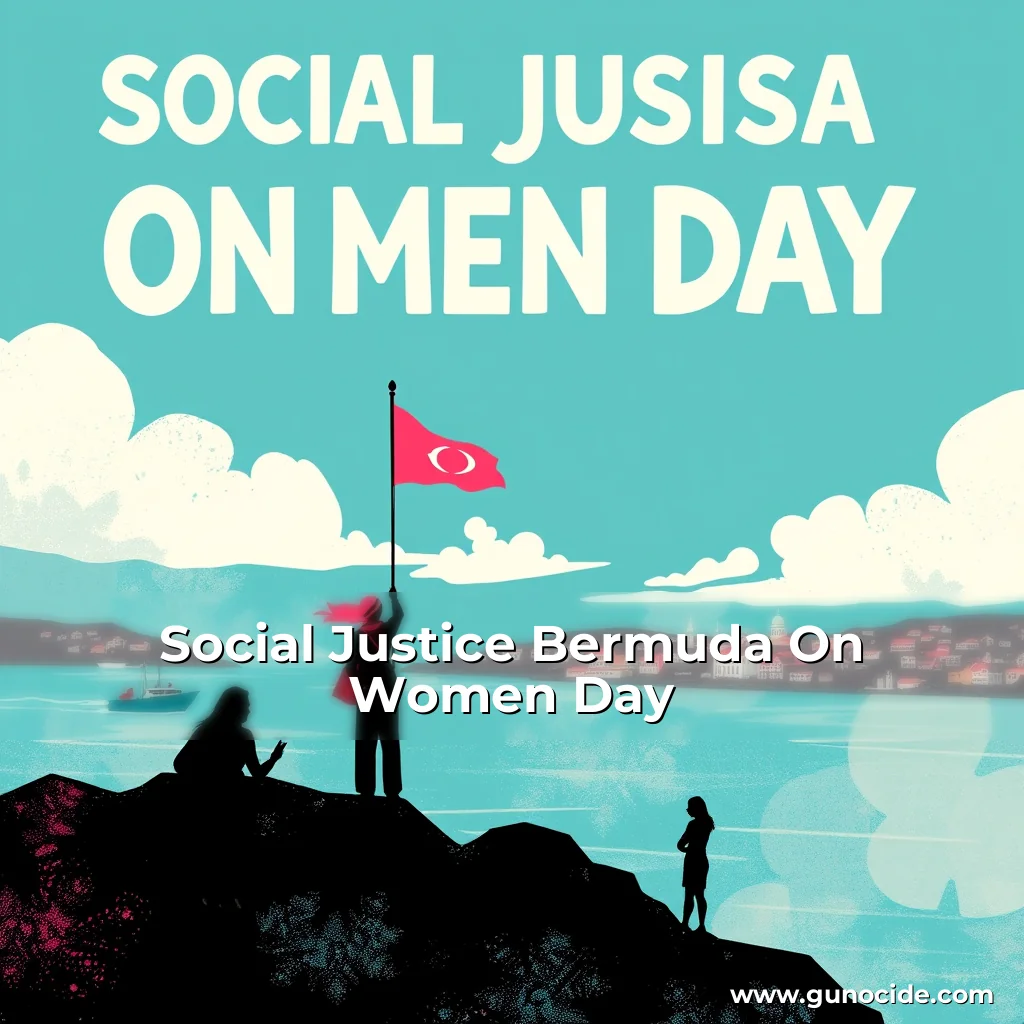
Celebrating Progress, Embracing Challenges, and Empowering Women in Bermuda.
Celebrating International Women’s Day in Bermuda
As the island nation of Bermuda marked International Women’s Day, the community came together to celebrate the progress made towards achieving gender equality and to recognize the challenges that still lie ahead.
A Brief History of International Women’s Day
International Women’s Day has its roots in the early 20th century, when women’s rights activists in the United States and Europe began to organize protests and rallies to demand equal rights and opportunities for women. The first International Women’s Day was celebrated on March 19, 1911, in Austria, Denmark, and Switzerland. The day gained popularity over the years, and by the 1970s, it had become a global celebration of women’s rights.
Bermuda’s Commitment to Women’s Empowerment
Bermuda has a long history of promoting women’s empowerment and equality. In 1998, the country passed the Equal Pay Act, which prohibited employers from paying women less than men for the same work. The government has also implemented policies to increase women’s representation in the workforce and to promote women’s participation in decision-making positions.
Key Initiatives and Events
Several initiatives and events were held in Bermuda to mark International Women’s Day. These included:
It is about ensuring that all individuals have access to safe and legal abortion services, regardless of their socio-economic status or geographical location.”
The Importance of Reproductive Justice
Reproductive justice is a fundamental human right that encompasses not only the right to abortion but also the right to safe and legal birth control, maternal healthcare, and access to reproductive health services. It is a critical component of social justice, as it recognizes the inherent dignity and worth of every individual, particularly women and marginalized communities.
The Current State of Reproductive Justice in Canada
In Canada, reproductive justice is a complex and multifaceted issue. The country has made significant progress in advancing women’s rights and reproductive health, but there is still much work to be done.
The fight for reproductive rights is a fight for human rights.” – SJB
The Fight for Reproductive Rights in Bermuda
The fight for reproductive rights in Bermuda is a complex and multifaceted issue, with various stakeholders and interests at play. At the heart of this debate is the need for pay equity and salary transparency, which are essential components of a fair and just society.
The Importance of Pay Equity and Salary Transparency
Pay equity and salary transparency are critical components of a fair and just society. When women are paid equally for equal work, it is a fundamental human right. However, in Bermuda, women are still paid significantly less than men for the same work. This pay gap is not only a matter of economic justice but also a reflection of the broader social and cultural norms that perpetuate inequality. The pay gap in Bermuda is significant, with women earning approximately 70% of what men earn for the same work. Women are disproportionately represented in low-paying jobs and are more likely to be employed in industries with limited career advancement opportunities.*
The Impact of Pay Equity and Salary Transparency on Reproductive Rights
The lack of pay equity and salary transparency has a direct impact on reproductive rights. When women are paid equally for equal work, they are more likely to have the financial resources to make informed decisions about their reproductive health.
This phenomenon is often referred to as the “double burden” or “double shift.”
The Double Burden of Emotional Labour
The Invisible Workload
The Double Burden of Racism
The Impact on Mental Health
Breaking the Cycle
Stop teaching girls that they are not good enough. Stop teaching girls that they are not smart enough.
Safeguarding Survivors of Gender-Based Violence Requires Stronger Legal Protections and Accountability.
The Need for Comprehensive Legal Protections for Survivors of Gender-Based Violence
The introduction of stronger legal protections for survivors of gender-based violence is a crucial step towards creating a safer and more equitable society. In Bermuda, the current legal framework is inadequate, leaving survivors vulnerable to further abuse and exploitation.
The Need for Collective Action
Social Justice Bermuda, a non-profit organization, has been advocating for the rights and dignity of marginalized communities in Bermuda. The organization’s mission is to promote social justice and equality, and to challenge systemic inequalities that perpetuate discrimination and marginalization.