
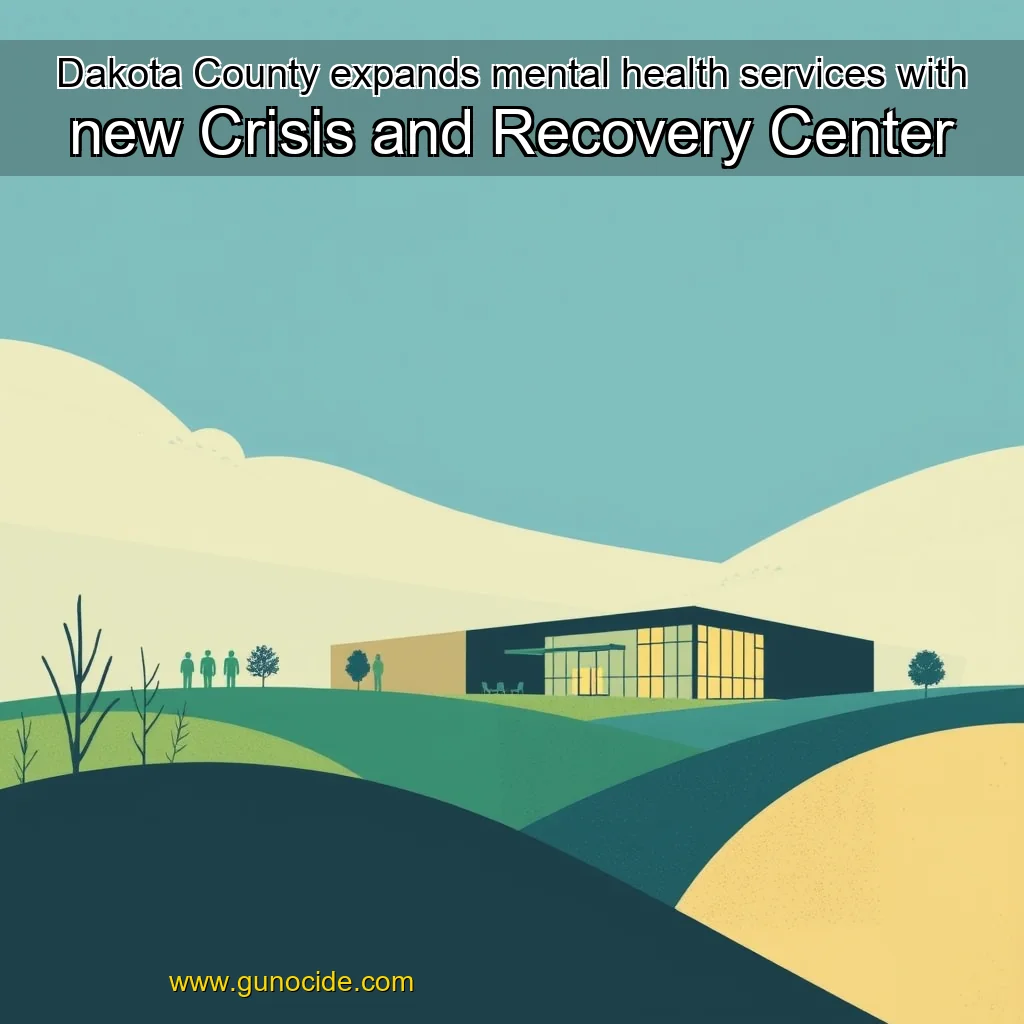
The center will serve the southeastern Minnesota region, including Dakota County and parts of Ramsey County.
A New Era in Mental Health Care
The Crisis and Recovery Center marks a significant milestone in the history of mental health services in Minnesota. This state-of-the-art facility is designed to provide comprehensive care to individuals struggling with mental health issues, including those experiencing a mental health crisis.
A Comprehensive Approach
The center will offer a range of services, including:
The building was designed by the renowned architectural firm, Perkins+Will, and features a unique, curved roofline and a large, open atrium.
The Vision Behind the New Facility
The new facility is a testament to the power of collaboration and community support. The project was spearheaded by the Minnesota Department of Human Services, in partnership with the O’Gara family, who donated $1 million to the cause. The facility will serve as a hub for various social services, providing a one-stop-shop for individuals and families in need.
The Dakota County Place to Go is a vital resource for adults in crisis, providing a safe and non-judgmental space for individuals to receive immediate support.
The Dakota County Place to Go: A Safe Haven for Adults in Crisis
The Dakota County Place to Go is a unique service that offers a safe and non-judgmental space for adults in immediate crisis. This center provides a range of services, including mental health assessments, short-term therapeutic assistance, and connections to longer-term services.
Services Offered
The short-term residential treatment Guild services are designed to provide support for individuals who are struggling with addiction, mental health issues, or other challenges that may be impacting their daily lives.
The Benefits of Short-Term Residential Treatment
Short-term residential treatment programs offer numerous benefits for individuals seeking help for addiction, mental health issues, or other challenges. Some of the key advantages include:
The building’s design prioritizes comfort and accessibility, making it an ideal location for those seeking support and connection.
The Healing Power of Nature
The building’s design incorporates elements that promote a sense of calm and well-being, leveraging the healing power of nature. This is achieved through various features, including:
He has also been able to pay his rent and utilities on time, a significant improvement from his previous situation.
The Journey to Independence
Hillstrom’s path to independence has been a long and arduous one. He has faced numerous challenges and setbacks, but with the help of Guild, he has been able to overcome them and achieve a better quality of life.
The Role of Guild
Guild has played a crucial role in Hillstrom’s journey to independence. The organization has provided him with the necessary support and resources to help him find a job, pay his bills, and manage his daily life. Some of the ways Guild has helped Hillstrom include:
The Impact of Independence
Hillstrom’s newfound independence has had a significant impact on his life.
“I wanted to show that we’re not just a bunch of privileged, entitled rich people, but we’re actually the people who are most affected by the gentrification of our neighborhoods.”
The Struggle is Real: Gentrification and Its Impact on Everyday People
Gentrification is a complex and multifaceted issue that affects not only long-time residents but also newcomers to a neighborhood. It’s a topic that has sparked heated debates and discussions, with some arguing that it brings economic growth and revitalization, while others claim it leads to displacement and erasure of community character.
The Human Side of Gentrification
When we talk about gentrification, we often focus on the statistics and the economic impact. However, it’s essential to remember that gentrification is not just a numbers game; it’s a human story. It’s about the people who are being pushed out of their homes, the small businesses that are being forced to close, and the community that is being erased. The displacement of long-time residents is a significant concern. As neighborhoods become more affluent, the cost of living increases, making it difficult for low-income families to afford housing. This can lead to a loss of community cohesion and a sense of disconnection from the neighborhood. The loss of small businesses is another significant consequence of gentrification. As new, more expensive establishments move in, long-time businesses are forced to close, leading to a loss of character and a sense of community. The erasure of community character is a critical issue. As neighborhoods become more affluent, the unique culture and history of the area are often lost.
- • Treatment services are usually covered by public health insurance benefits. • The center provides a range of services, including counseling, case management, and support groups.
The Crisis Center is scheduled to begin services on Feb. 10.