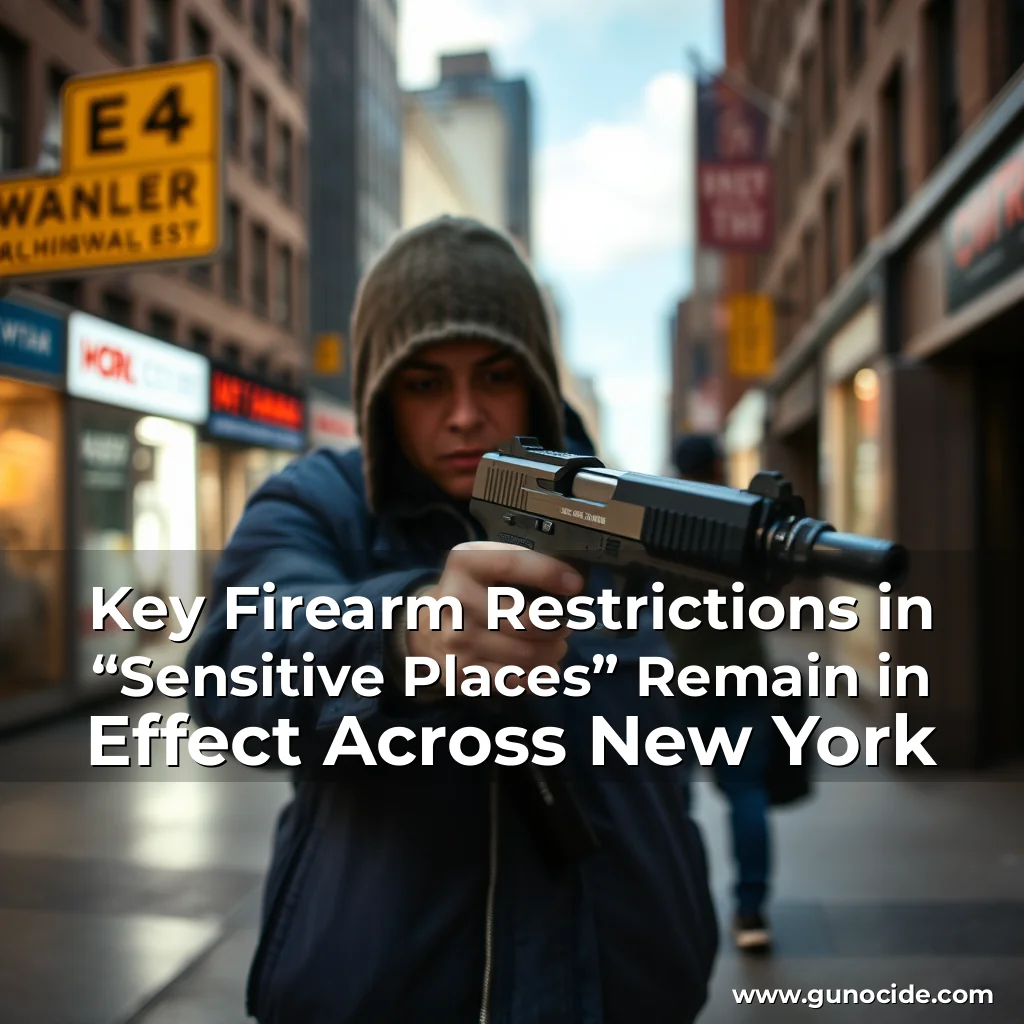
The U.S. Supreme Court has declined to hear a case challenging New York’s strict gun law, which means that the state can continue to enforce its rules that limit where people can carry firearms and how they qualify for permits. ### What the Ruling Means for Gun Owners
The decision to not hear the case means that New York can continue to enforce its rules that define “sensitive locations” where guns are banned. These areas include:
- Government buildings
- Schools and places of worship
- Hospitals and healthcare centers
- Entertainment venues, bars, and polling places
- Times Square
Additionally, applicants for concealed carry permits must prove they have “good moral character.” This standard includes the ability to use a firearm responsibly without endangering others. ### Which Parts of the Law Are Still Blocked? While the court let most of the law stand, it left two parts blocked:
- A rule that banned firearms on private property open to the public
- A requirement to submit social media account information when applying for a license
These provisions were found to overreach, especially in terms of privacy and public access. ### Why This Case Was Important
After the court’s 2022 Bruen decision, which expanded gun rights nationwide, states like New York responded with new legislation. Lawmakers aimed to maintain public safety without violating the Second Amendment. The six residents who brought this case wanted the court to rely strictly on gun laws from 1791, when the Second Amendment was ratified. However, lower courts considered historical context from the 1800s as well. This broader view played a key role in the outcome. ### What This Means Nationally
Although the Supreme Court has strengthened gun rights in recent years, it still supports certain restrictions. This case is the latest example. The court’s recent rulings demonstrate its willingness to balance gun rights with public safety concerns. Some recent examples include:
| Ruling | Year | Description |
|---|---|---|
| Upheld regulations on “ghost guns” | March 2025 | Regulations on firearms that can be assembled without serial numbers |
| Allowed gun bans for people under domestic violence restraining orders | N/A | No specific year given for this ruling |
| Struck down a federal ban on “bump stocks” | 2023 | Allowing the use of bump stocks in firearms |
### What’s Next for New York Gun Owners? New York residents applying for a concealed carry permit must continue to follow current rules. This includes providing character references and avoiding restricted areas when carrying a firearm. Legal experts expect more challenges to gun laws in other states. However, for now, New York’s key firearm regulations remain in full force. The decision to not hear the case means that New York’s firearm restrictions remain largely untouched, signaling continued support for certain gun control measures—even in a post-Bruen legal landscape. By declining to hear the case, the Supreme Court has effectively left New York’s laws intact, allowing the state to maintain its strict regulations on firearm use.
As the debate over gun control continues, it’s essential to understand the nuances of the Second Amendment and the court’s role in interpreting it.