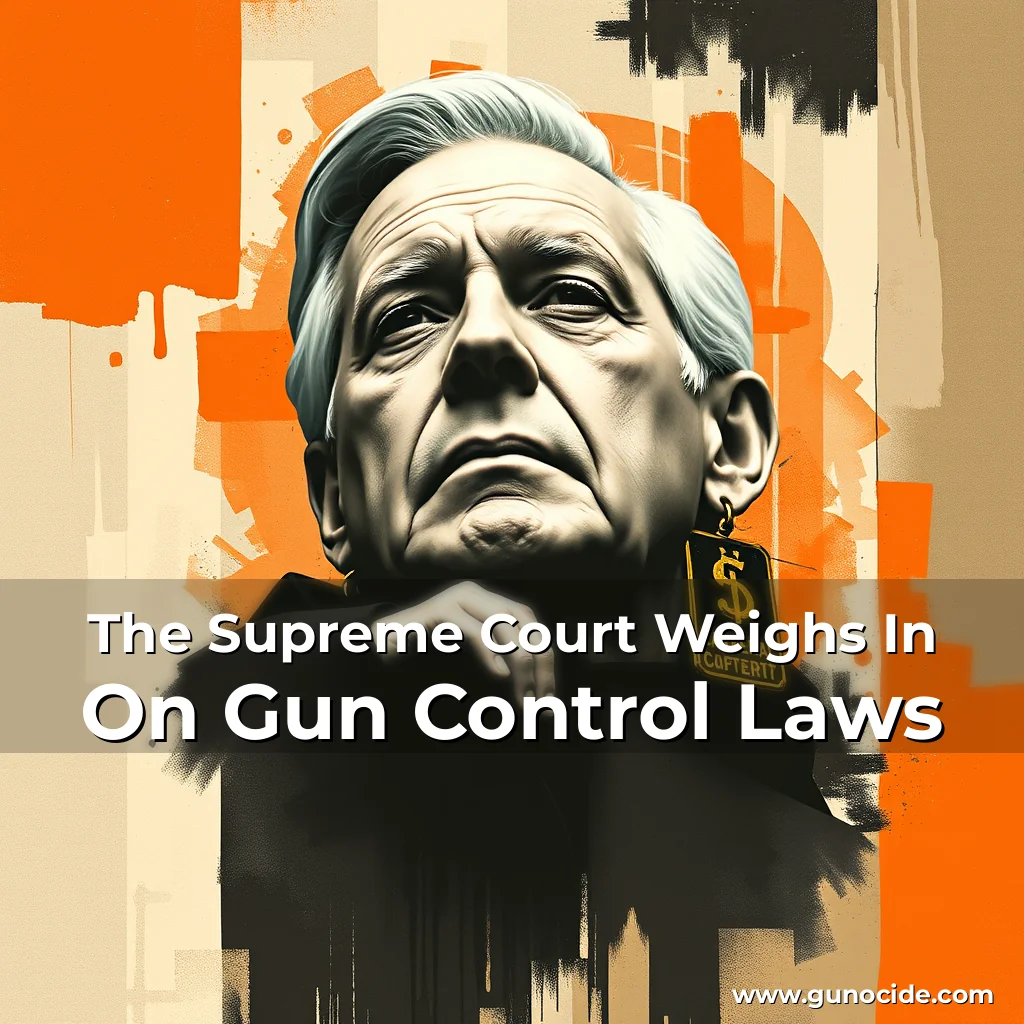
The Supreme Court has handed down a significant decision in the case of Minnesota v. Firearms Policy Coalition, which seeks to overturn a lower court ruling that struck down the state’s law banning 18- to 20-year-olds from obtaining permits to carry firearms in public.
The Law In Question
The law in question, enacted in 2003, prohibits individuals under the age of 21 from applying for a permit to carry a firearm in public. The law was challenged by gun rights groups, including the Firearms Policy Coalition, in addition to individual members.
- The law allows individuals under the age of 21 to possess firearms with supervision, or without supervision in certain circumstances, such as when hunting or on private property.
- Gun control advocates argue that the law is necessary to prevent young adults from accessing firearms, as guns are a leading cause of death, both suicides and homicides, among people between the ages of 18 and 20.
The Court’s Decision
The Supreme Court rejected the state’s appeal of the lower court ruling, which held that the law banning 18- to 20-year-olds from applying for permits to carry firearms in public violates the Constitution’s Second Amendment.
The Second Amendment to the US Constitution states: “A well-regulated Militia, being necessary to the security of a free State, the right of the people to keep and bear Arms, shall not be infringed.”
The court’s decision sends a signal that similar laws, including one at the federal level, could be under threat in the future.
Implications
The decision has significant implications for gun control laws across the country.
- The decision upholds the right of young adults to carry firearms, which is a key issue in the ongoing debate over gun control.
- The decision could lead to a wave of new litigation, as states and local governments challenge existing gun control laws.
Other Gun-Related Cases
The Supreme Court also turned down another gun-related case, involving a challenge to the University of Michigan’s ban on possessing firearms on campus.
This case is likely to return to the court, as the issue of campus gun policies remains a contentious one.
- The University of Michigan’s ban on firearms on campus is one of several similar bans in place across the country.
- Gun control advocates argue that the ban is necessary to prevent guns from being used in campus violence.
Background
The Minnesota law was enacted in 2003, and more than 30 states and the District of Columbia have similar measures in place.
- The federal law requires individuals to be 21 to purchase a handgun from a licensed dealer.
- Other firearms are available for purchase at an earlier age.
Conclusion
The Supreme Court’s decision in the case of Minnesota v.